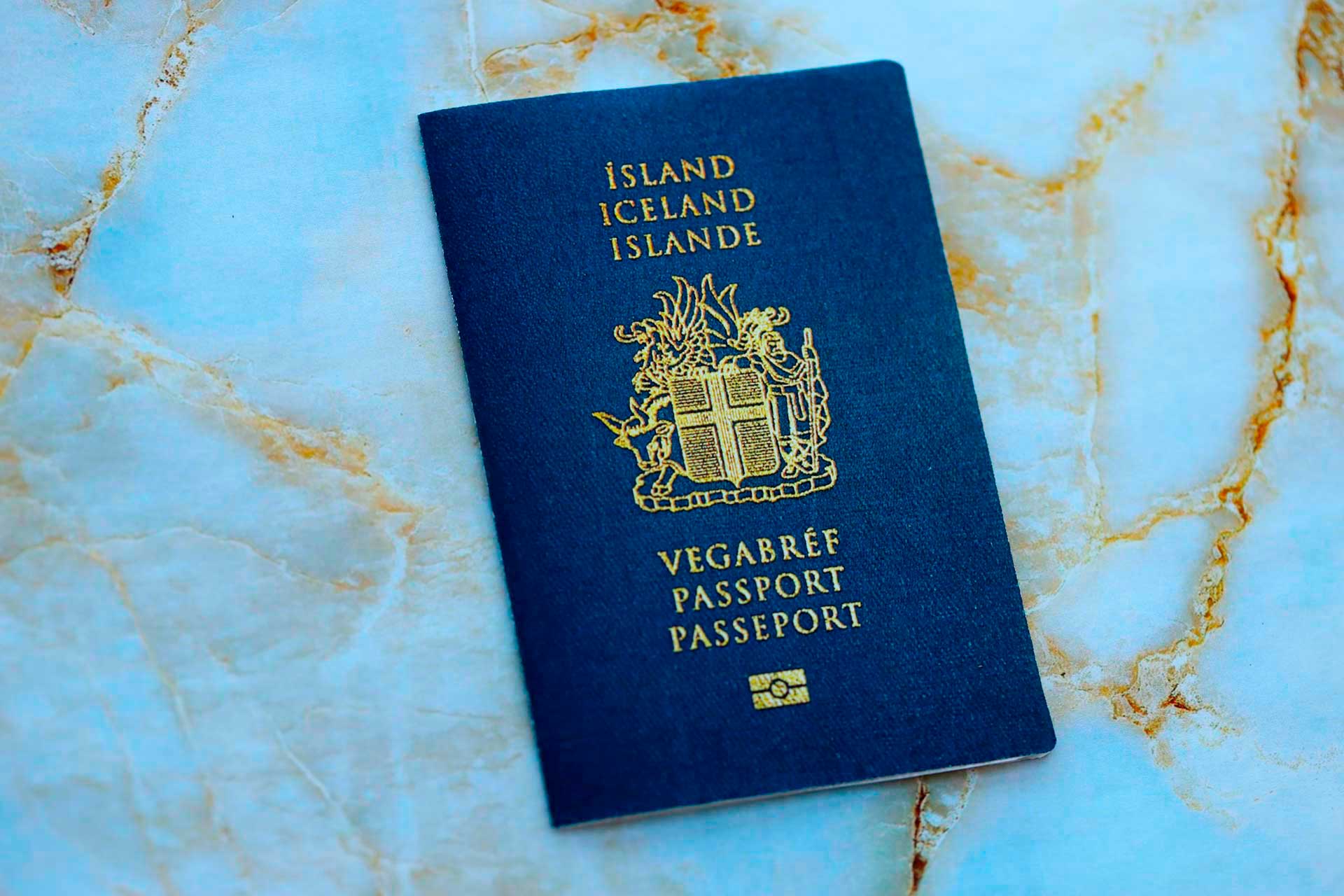
- Advantages of Albanian Citizenship
- Main Ways to Obtain Albanian Citizenship
- Requirements and Procedure for Obtaining Albanian Citizenship
- How Much Time and Money Are Needed to Obtain Albanian Citizenship
- What Doesn’t Work: How You Cannot Obtain an Albanian Passport
- Dual Citizenship in Albania: Is It Allowed to Hold Multiple Passports?
- Where Is It Faster and Easier to Obtain a Second Passport: Overview of Alternatives
Albanian citizenship is a status that allows you to legally live in the country, work, access public education and healthcare services, benefit from social guarantees and banking products, freely purchase real estate without restrictions, and fully participate in the country’s economic and social life. In 2026, it can be obtained through naturalization, descent, or marriage to an Albanian citizen. The process usually involves several stages: from obtaining a residence permit to applying for an Albanian passport.
You can obtain this status by residing in the country for the legally required period, having Albanian ancestry, or being married to an Albanian citizen. Despite the absence of mass programs such as citizenship by investment, interest in Albanian citizenship is gradually growing among foreigners, primarily due to relatively simple requirements and affordable processing costs. Many consider Albania a more accessible option for relocating closer to the European Union. But which pathways actually work, and how long does the process take? Let’s explore further.
Advantages of Albanian Citizenship
An Albanian passport allows you to reside permanently in a European country with a mild climate, affordable cost of living, and a comfortable environment. Although Albania is not yet part of the EU, its citizenship enables visa-free travel to 87 countries, simplifies doing business, and makes it easier to plan relocation to Albania. With this status, you gain the following benefits:
- the ability to travel visa-free to dozens of countries, including the Schengen area, EU member states, the United States, Canada, and the United Kingdom;
- the right to legally live and work in Albania without the need for additional permits;
- the opportunity to start a business or relocate operations to a more favorable tax jurisdiction;
- access to the public healthcare and education systems;
- the ability to open bank accounts, obtain loans, and use financial services as a resident.
It is also worth noting that an Albanian passport is often considered a transitional step for moving to Europe. It provides greater freedom of movement and facilitates further integration, although it does not offer the same rights as EU citizenship.
A key advantage is the balance between accessibility and opportunities. Compared to many EU countries, the requirements and costs are lower, and the process is generally simpler with fewer formalities. Albanian citizenship can be a practical solution not only for those planning to settle in the country: Albania is an EU candidate country, so in the future, its passport may provide a pathway to EU citizenship.
At the same time, it is important to consider not only the obvious advantages but also potential drawbacks that are often overlooked in general overviews, for example, lengthy processing times and the requirement for actual residence in the country.
To ensure you obtain EU citizenship through a simplified procedure and enjoy all its benefits, consider booking a consultation. Our specialists will help assess your chances, verify eligibility, and select the most suitable application option.
Main Ways to Obtain Albanian Citizenship
The granting of citizenship is regulated by the current Law “On Citizenship,” which defines the grounds, procedures, and conditions under which a foreigner can obtain an Albanian passport. The main pathways remain unchanged: naturalization, marriage, and descent (repatriation). The legislation provides for a step-by-step process, from obtaining a residence permit and living in the country to submitting an application and completing the acquisition of Albanian citizenship.
Unlike some European countries, Albania does not offer simplified programs that allow fast-track citizenship through investment. Any applicant, even with significant financial investments, must follow the standard path of residence and integration.
Naturalization + Marriage
The primary legal way for a foreigner without Albanian roots to obtain citizenship is naturalization. This option is suitable for those planning real relocation, long-term residence, and integration into society. The law requires the applicant to be an adult, to have legally resided in the country for 5 or more years, to hold a valid residence permit (temporary or permanent), to have a stable source of income and housing, and to comply with local laws. Particular attention is given to language proficiency and overall reliability, background checks are conducted on identity, sources of income, and history of residence in the country.
A key feature of naturalization in Albania is the absence of any formal “accelerated” route. Even with business activities or investments, the applicant must follow the standard procedure. At the same time, the requirements are considered relatively moderate compared to some other European countries.
To apply, it is necessary to prepare documents in advance confirming the duration of residence, financial stability, and legal stay in the country. An important factor is continuity of residence. Although the law does not set a strict limit on days of absence, the applicant must demonstrate actual residence in Albania. Extended absences of several months or spending most of the year outside the country may raise questions during the review process and could lead to refusal.
Obtaining citizenship through marriage to an Albanian citizen is considered a simplified option. It is necessary to prove the authenticity and duration of the relationship, formal or fictitious marriages are thoroughly checked. To qualify, the applicant must be officially married to an Albanian citizen for at least 3 years and must have legally resided in the country for at least 1 year prior to submitting the application.
Repatriation
A foreigner with Albanian roots may also apply for citizenship. In practice, this requires proving a family connection to an Albanian citizen up to the second degree of kinship, typically through parents or grandparents. If descent is confirmed even through one parent, citizenship may be granted provided the applicant has lived in the country for at least 3 years.
To do this, official documents must be submitted, such as birth certificates, archival records, documents confirming relatives’ citizenship, and other evidence establishing an unbroken chain of descent.
In most cases, long-term residence in the country and obtaining a residence permit are not required. However, the applicant still undergoes standard state checks, including verification of submitted data and assessment of reliability.
If you have European roots, it is important to properly assess your eligibility and collect supporting evidence, this directly affects the outcome. Our specialists can help verify your eligibility for citizenship by repatriation in EU countries, prepare the required documentation in accordance with the law, and choose the optimal strategy for obtaining a second passport.
Get EU citizenship fast and easily
Learn how to become an EU citizen through simplified programs
Requirements and Procedure for Obtaining Albanian Citizenship
Foreigners most often obtain an Albanian passport through naturalization by meeting a number of mandatory requirements and completing the established procedure. To submit an application, the following set of documents is required:
- application for citizenship;
- valid international passport;
- valid residence permit (temporary or permanent);
- birth certificate (if applicable to the grounds);
- marriage certificate (if applicable);
- criminal record certificate (from Albania and the country of citizenship);
- proof of income;
- document confirming place of residence;
- certificate or proof of Albanian language proficiency (level A2 or higher);
- photographs in the required format;
- receipts confirming payment of state fees.
To become a citizen of Albania, you need to go through several consecutive stages:
- Obtain a type D visa (if visa-free entry is not available), enter the country, and register. If the applicant does not have visa-free access, a long-term type D visa must be obtained. It is issued for purposes such as work, business, study, or family reunification and serves as the basis for obtaining a residence permit. After arrival in Albania, you must register your place of residence and submit documents to legalize your status. This stage marks the beginning of your legal stay in the country.
- Obtain and renew a residence permit. A residence permit is issued based on the purpose of stay (employment, business activity, study, or family). It is typically granted for one year with the possibility of renewal. The permit must be renewed regularly in compliance with deadlines and grounds for residence. It is important not to leave the country for extended periods in order to maintain continuous residence. After several years of legal residence (usually from 5 years), you may apply for permanent residence. This status confirms long-term integration and allows you to proceed to the next stage.
- Prepare documents and submit the application. All documents must be translated into Albanian and certified. The citizenship application is submitted through authorized authorities or via the electronic public services platform e-Albania. All prepared documents must be attached to the application.
- Application review and decision. State authorities conduct a comprehensive review, including verification of legal residence, financial status, criminal record, and security risks. The review process may take from several months to a year or longer. You can track the status of your application through your personal account on the government website or by using your case number. If the decision is positive, an official act granting citizenship is issued. If the application is rejected, you should analyze the reason stated in the notification, correct any identified issues, and, if necessary, file an appeal or resubmit the application after addressing the deficiencies.
- Obtaining the passport. After approval, you can apply for internal documents, an ID card and an international passport. From that moment, the applicant becomes a full citizen of Albania.
Even with a correctly prepared application, this process involves many formalities and carries a risk of rejection at any stage. At the same time, many applicants do not consider that in some cases they may already have grounds to obtain citizenship of an EU country through a simplified procedure, much faster and with broader opportunities. In such situations, it may not make sense to spend years on standard naturalization if a second passport can be obtained in a shorter timeframe.
Our specialists can help determine whether such an option is available to you and develop the optimal strategy, so you don’t waste time and can choose the most efficient path to second citizenship.

How Much Time and Money Are Needed to Obtain Albanian Citizenship
The time required and the cost of obtaining Albanian citizenship depend on the chosen pathway and the stages of the procedure.
Under standard naturalization, the total timeframe averages 5 to 7 years of residence before applying, and in some cases may exceed 7 years when all stages are taken into account. The application review itself typically takes around 6–24 months. Official fees are distributed as follows:
- type D visa — €10–100 depending on your current citizenship;
- residence permit (temporary) — approximately €50;
- residence permit renewal — €25;
- permanent residence permit — approximately €50;
- citizenship application — €30 when applying through a consulate abroad, €50 when applying within Albania;
- passport and ID card issuance — €186;
- translation of documents into Albanian — on average €8–12 per page.
However, it is important to consider not only official expenses but also the real experience of the process. Based on feedback from those who have obtained Albanian citizenship, the key factors are not only cost but also the duration of the process and the requirement for continuous residence in the country. On average, over a 5-year period, total expenses per person can reach nearly €40,000, excluding rent and utility costs.
What Doesn’t Work: How You Cannot Obtain an Albanian Passport
There are several common misconceptions surrounding second citizenship in Albania. The most frequent ones include:
- Citizenship by birth. A child does not automatically receive citizenship based on place of birth. Albania follows the principle of jus sanguinis (right of blood), meaning citizenship is passed on from parents.
- Buying a passport. There is no official citizenship-by-investment program in the country. Any offers to “buy a passport” are fraudulent.
- Fictitious marriage. Marriage only provides grounds for obtaining a residence permit and only if the relationship is genuine. If a marriage is found to be fictitious, the status will be revoked.
- Citizenship through real estate. Purchasing property may serve as a basis for obtaining a residence permit, but it does not lead directly to citizenship. Residence in the country and completion of the standard procedure are still required.
If you are considering Albania as an option for relocation or obtaining a second citizenship, it is more reasonable to choose a legal and transparent pathway from the start. Our specialists can help assess your situation, select the most suitable grounds for relocation, and develop a strategy without risks or refusals. This will save not only money but also years that could be lost trying to take “shortcuts.”
Get EU citizenship under a simplified procedure
Default Description

Dual Citizenship in Albania: Is It Allowed to Hold Multiple Passports?
Obtaining an Albanian passport does not require you to renounce your existing citizenship, you can retain both statuses.
It is important to distinguish between two concepts: dual citizenship and second citizenship. In a legal sense, “dual citizenship” exists when countries have a formal agreement and mutually recognize both citizenships. “Second citizenship” is a more common situation, where a person simply holds two passports, and the countries have no specific agreements between them. In the case of Albania, it is almost always a matter of second citizenship.
When applying for a passport, you should consider not only Albanian laws but also the regulations of your home country. Some countries impose restrictions or require notification when acquiring citizenship of another state.
Where Is It Faster and Easier to Obtain a Second Passport: Overview of Alternatives
The process of obtaining citizenship is not equally complex or lengthy everywhere. In some European Union countries, such as Romania, Slovenia, or Bulgaria, more accessible programs are available, for example, based on ancestry. In such cases, a passport can be obtained significantly faster than through standard naturalization, which typically requires years of residence. With the right approach, timelines can be reduced to several years, or even less if valid grounds exist. At the same time, you receive a full EU passport with all associated rights: the ability to live, work, and conduct business in any EU country.
In practice, the key factor is not so much the country as the correctly chosen strategy. Mistakes in documentation, selecting the wrong eligibility basis, or attempting to proceed without proper guidance often lead to refusals and wasted time. Therefore, the assistance of migration specialists is not just a formality but a practical way to speed up the process and avoid risks. Contact us to find the optimal program for your situation and achieve the desired result as efficiently as possible.
Mark Gartman
Migration lawyer
The lawyer of Futurepassports company, which specializes in international law. Advises on immigration issues and helps you find the best options to quickly obtain citizenship in EU countries.
“Immigration is not just a journey from one place to another, it is a journey from who you were to who you can become.”